

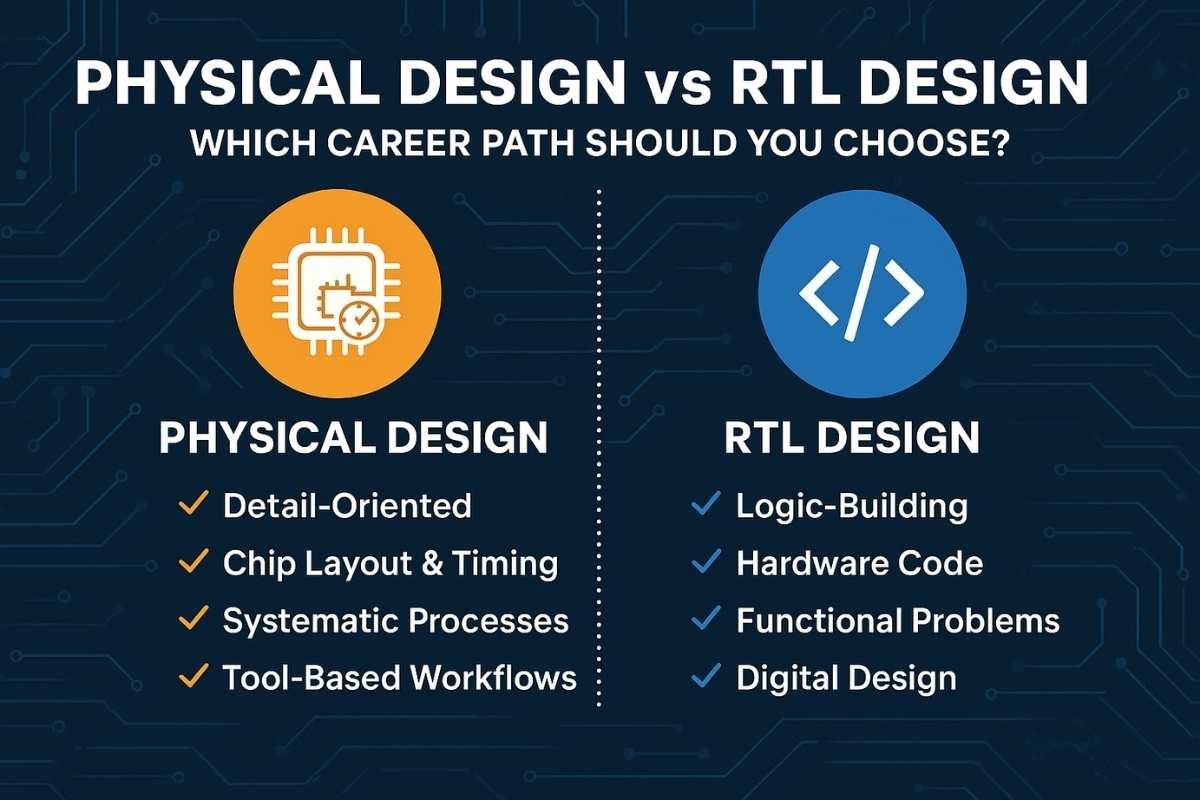
Choosing between Physical Design vs RTL Design is one of the biggest decisions for students entering the semiconductor industry. Many fresh graduates, especially in Bengaluru and South India, often get confused while selecting the right VLSI Career Path. This guide will help you understand both domains clearly so you can choose the best direction for your future.
Understanding the Core Difference – Physical Design vs RTL Design
Physical Design focuses on converting a verified netlist into a chip layout using steps like placement, routing, and timing closure.
RTL Design focuses on writing hardware logic using Verilog or SystemVerilog, ensuring correct digital functionality.
Both paths are important—but they require different mindsets and skillsets.
What Does an RTL Design Engineer Actually Do?
RTL engineers design digital logic blocks from scratch.
Your daily tasks include:
- Writing Verilog/SystemVerilog code
- Working with design specifications
- Performing module partitioning
- Ensuring design meets timing, area, and power targets
- Working closely with the Verification team
RTL roles require strong problem-solving skills and deep digital electronics knowledge.
What Does a Physical Design Engineer Do?
Physical Design engineers take RTL code (after verification) and transform it into a silicon-ready layout.
Their tasks include:
- Floorplanning
- Placement and CTS
- Routing
- STA closure
- Power planning
- IR drop and DRC checks
PD engineers must be detail-oriented and comfortable working with EDA tools like Cadence Innovus and Synopsys ICC.
Skills Required to Become an RTL Engineer
- Verilog / SystemVerilog
- Digital Logic Design
- State Machines
- Low-power design concepts
- Scripting (Python, Tcl)
- Simulation tools (Cadence Xcelium, QuestaSim)
Strong logic-building skills are crucial here.
Skills Required to Become a Physical Design Engineer
- CMOS concepts
- STA knowledge
- Timing optimization techniques
- Cadence Innovus / Synopsys PrimeTime
- Clock tree synthesis
- Floorplanning and routing
- Physical verification checks
If you enjoy systematic workflows and tools, PD may be the better choice.
Salary Growth: Physical Design vs RTL Design
Both fields offer excellent packages, but PD engineers often start with slightly higher salaries due to tool complexity and fewer trained freshers.
Average package insights:
- RTL Design Engineer: ₹6–10 LPA for freshers
- Physical Design Engineer: ₹7–12 LPA for freshers
- With 5+ years experience: ₹20–40 LPA depending on company & role
The gap is closing, but PD still remains slightly more premium.
Market Demand in India – Which One Has More Opportunities?
India’s VLSI ecosystem is expanding fast — especially in Bengaluru, Hyderabad, and Chennai.
Chip design companies need both RTL and PD engineers, but the hiring numbers differ:
- RTL hiring: More openings (design + verification focused)
- PD hiring: Fewer openings but fewer skilled candidates
This means Physical Design often has less competition if you choose the right training.
Which Path Fits Your Personality and Strengths?
Choose RTL Design if you are:
✔ Good at logic-building
✔ Interested in writing hardware code
✔ Enjoy solving functional problems
✔ Strong in digital design fundamentals
Choose Physical Design if you are:
✔ Detail-oriented
✔ Comfortable with systematic processes
✔ Interested in chip layout & timing
✔ Strong in tool-based workflows
Match the field to your natural strengths for long-term success.
Why Choosing the Right Training Institute Matters
Whether you choose Physical Design or RTL Design, you need hands-on training with industry-level projects and EDA tools.
This is where selecting the Best VLSI Institute in Bengaluru becomes important.
A good institute should provide:
- Cadence and Synopsys licensed tools
- Real-time RTL/PD projects
- Placement support
- Expert mentors
- Internship programs
- Strong portfolio-building
- Exposure to industry workflow
This ensures you enter the job market with confidence and clarity.
Final Thoughts – Choosing the Best VLSI Career Path
Both Physical Design and RTL Design are powerful VLSI career paths with great growth potential. The right choice depends on your strengths, interests, and long-term goals.
If you love logic, choose RTL.
If you enjoy tool-based workflows, choose Physical Design.
No matter which you prefer, companies in Bengaluru are always hiring skilled VLSI engineers with hands-on training and strong project experience.
If you’re looking to start your journey, ChipXpert stands strong as one of the Best VLSI Institute in Bengaluru, offering tool-based training, live projects, and complete placement support.
Share your question in comments or talk to our mentor team for batch guidance.
Need Fee, Duration, or Demo Class Details?
Talk to our admin team for the latest batch plan and career guidance.
Contact Admin TeamAsk the Admin Team
Drop your basic question in comments: eligibility, prerequisites, tools, fee range, and placement support.
Our team reviews and responds regularly.