

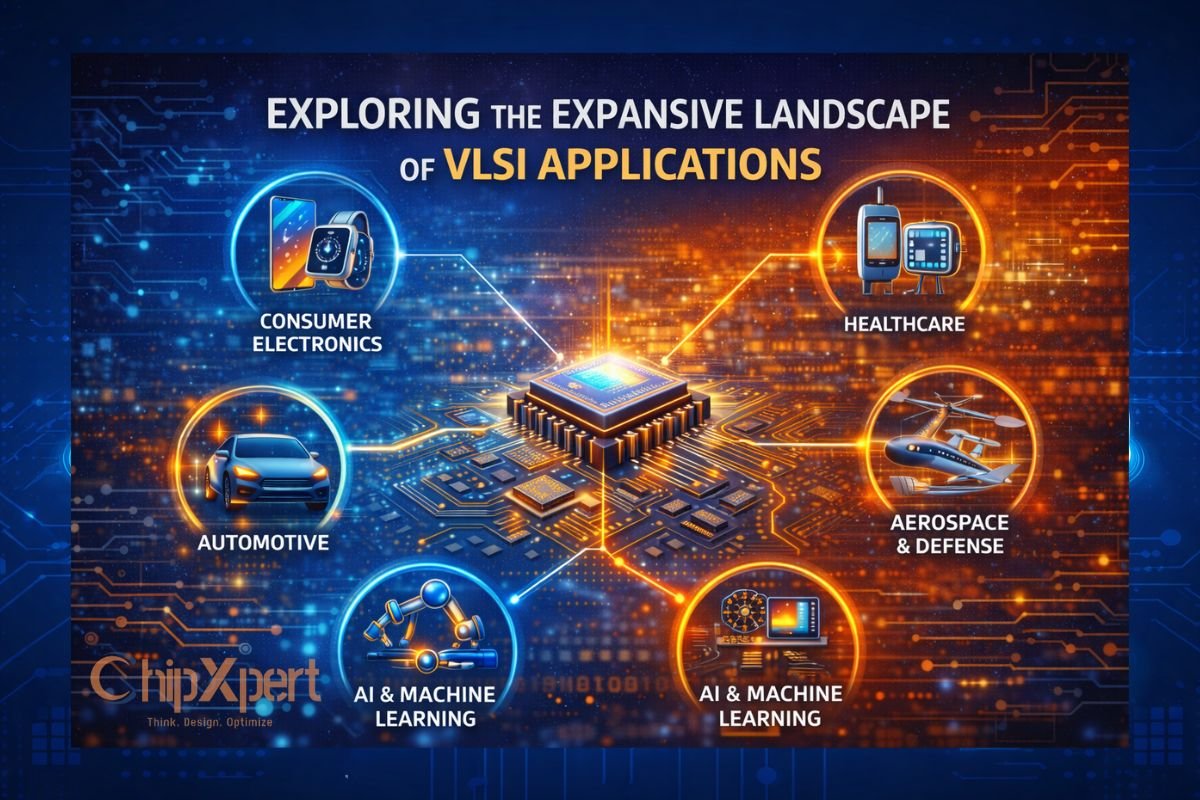
Very Large Scale Integration or VLSI is at the heart of modern electronics design. From the smartphone in your hand to complex systems used in automotive and aerospace, VLSI technology plays a vital role in shaping how devices operate today. As the demand for smarter, faster, and more power efficient electronics continues to grow, the applications of VLSI have expanded significantly.
In this article, we will explore the broad range of areas where VLSI is used and how it continues to influence innovation in technology.
The Foundation of Modern Electronics
VLSI refers to the process of integrating millions of transistors and other circuit components onto a single chip. This has allowed powerful systems to be built in smaller footprints with greater performance and efficiency. The rapid growth of computing devices over the last few decades is closely tied to the advancements in VLSI design and fabrication.
Without VLSI, the modern electronic world as we know it could not exist. Its impact is seen in nearly every type of digital system we use today.
VLSI in Consumer Electronics
The most visible applications of VLSI are in consumer electronics. Everyday devices such as smartphones, tablets, laptops and wearable devices all rely on integrated circuits designed using VLSI techniques.
For example, a smartphone contains multiple chips for processing, memory, graphics, and connectivity. Each of these chips incorporates millions of components that must work together seamlessly. VLSI enables these highly complex systems to operate smoothly, while maintaining low power consumption and compact size.
In wearable technology, VLSI has made it possible to deliver powerful features in very small form factors. Fitness trackers and smart watches integrate sensors, displays, communication modules, and processors all on tiny chips. This integration improves reliability and performance, while making the devices more energy efficient.
VLSI in Communication Systems
Communication technology is another major area where VLSI plays a crucial role. Wireless communication standards such as 4G, 5G and beyond require advanced signal processing, high speed data transfer, and low latency. VLSI design enables these capabilities by allowing powerful baseband processors and radio systems to be integrated into compact chips.
The rollout of 5G networks has further accelerated the importance of VLSI. These networks rely on complex signal algorithms that must run in real time. VLSI based solutions help meet these performance needs while keeping power use under control.
In addition to mobile communication, VLSI is key in wired networks, satellite communication, and Internet of Things connectivity. Networking devices such as routers, switches and modems are built using VLSI based system on chip designs to support faster data transfer and increased reliability.
VLSI in Automotive Applications
The automotive industry has transformed from simple mechanical vehicles to complex computer controlled systems. Today’s cars incorporate advanced driver assistance systems, autonomous navigation features, infotainment systems, and more. All of these functions depend on integrated circuits designed using VLSI.
Safety critical systems such as anti lock braking, adaptive cruise control and collision avoidance require high reliability and real time processing. VLSI based chips ensure these systems operate with precision and speed. Electric vehicles also use specialized power management and battery control systems that rely on VLSI technology for efficient operation.
Autonomous vehicles, in particular, require extensive computing power for sensor fusion, path planning, and machine learning inference. VLSI systems with high performance processing cores and dedicated accelerators make this possible.
VLSI in Healthcare and Biomedical Devices
Healthcare technology has made significant strides with the help of VLSI based systems. Medical imaging equipment, portable diagnostic tools, and implantable devices rely on advanced integrated circuits for processing, communication and control.
For example, MRI and CT scan machines use high performance VLSI chips to process large amounts of data and produce clear images. Wearable health monitors such as heart rate sensors and glucose monitors use VLSI chips to gather, filter and communicate data in real time.
Implantable devices such as pacemakers and neurostimulators benefit from VLSI’s ability to deliver low power operation and reliable performance in small form factors. This ensures that devices can run for long periods without battery replacement while maintaining accurate function.
VLSI in Aerospace and Defense
Aerospace and defense applications often require systems that can operate in extreme conditions and maintain reliability under critical constraints. VLSI technology enables the design of high performance computing systems, communication modules and control systems used in satellites, radar equipment and avionics.
Satellites use VLSI chips to manage communication, imaging and data handling functions. These chips must withstand high radiation environments and operate reliably for extended mission durations. VLSI designers use specialized techniques to ensure robustness and fault tolerance.
In defense applications, real time processing and secure systems are essential. VLSI based solutions are used in secure communication, radar signal processing, and autonomous navigation. These systems must be accurate, fast and resilient to interference.
VLSI in Artificial Intelligence and Machine Learning
Artificial intelligence and machine learning have become essential components of modern technology. From voice assistants to image recognition, AI is transforming how systems perceive and respond to data. VLSI plays a critical role by providing optimized hardware that can process complex algorithms efficiently.
Traditional CPUs are not always ideal for AI workloads due to their general purpose nature. Specialized VLSI based accelerators such as GPUs, TPUs and neural processing units provide higher performance with lower power consumption. These chips are tailored for matrix operations and parallel processing that are common in machine learning tasks.
Edge AI devices that run inference locally also rely on VLSI technology. These chips enable efficient AI processing without sending data to the cloud, which improves speed and privacy.
Looking Ahead: The Future of VLSI
The landscape of VLSI applications continues to grow as new technologies emerge. Quantum computing, neuromorphic chips and advanced heterogeneous systems are opening new frontiers. VLSI will continue to evolve to meet future demands of higher performance, increased integration and lower power.
As design tools and fabrication technologies improve, VLSI based systems will become more capable, enabling innovations across industries. The future of electronics depends on the continued advancement of VLSI design and architecture.
Conclusion
VLSI is the backbone of modern electronics and computing. Its applications range from everyday consumer devices to mission critical systems in aerospace and defense. As technology continues to advance, VLSI will remain central to developing the next generation of intelligent, efficient and reliable systems.
Understanding the broad applications of VLSI helps engineers and technology leaders prepare for future challenges and opportunities in the semiconductor domain.
Share your question in comments or talk to our mentor team for batch guidance.
Need Fee, Duration, or Demo Class Details?
Talk to our admin team for the latest batch plan and career guidance.
Contact Admin TeamAsk the Admin Team
Drop your basic question in comments: eligibility, prerequisites, tools, fee range, and placement support.
Our team reviews and responds regularly.